Fast sites first, then marketing.
Why 3tf advertises only websites it builds, and the seven stages we follow: research, competitor analysis, strategy, the site, Google Ads, Meta, TikTok and CRM.













The idea in brief
We run advertising only on websites we have built or rebuilt to our standard, because we know they load fast, handle a surge of enquiries and pass every lead into the CRM. Research, competitor analysis and strategy come first; campaigns on Google, Meta and TikTok come after.
Why we advertise only sites we build
Many agencies take whatever website a client already has and start spending on ads. We work the other way round. Before any budget goes into Google, Meta or TikTok, we make sure the page the traffic lands on is one we built, or one we have rebuilt to our standard.
The reason is practical. Advertising buys a visit; the website decides whether that visit becomes a lead. When the site is ours, we know how it behaves under load, how quickly each page opens on a phone, which actions are tracked and where every form sends its data. We are not left guessing whether a lead was lost to a slow page, a broken plugin or a form that emails nobody.
That control matters most when a campaign starts working. Enquiries can multiply within days, and the site has to keep up. Our sites are built for that: pages are prepared in advance and served quickly, each form passes the lead straight into the CRM, and the right person is notified at once instead of finding the enquiry the next morning.
What a fast, well-built site looks like
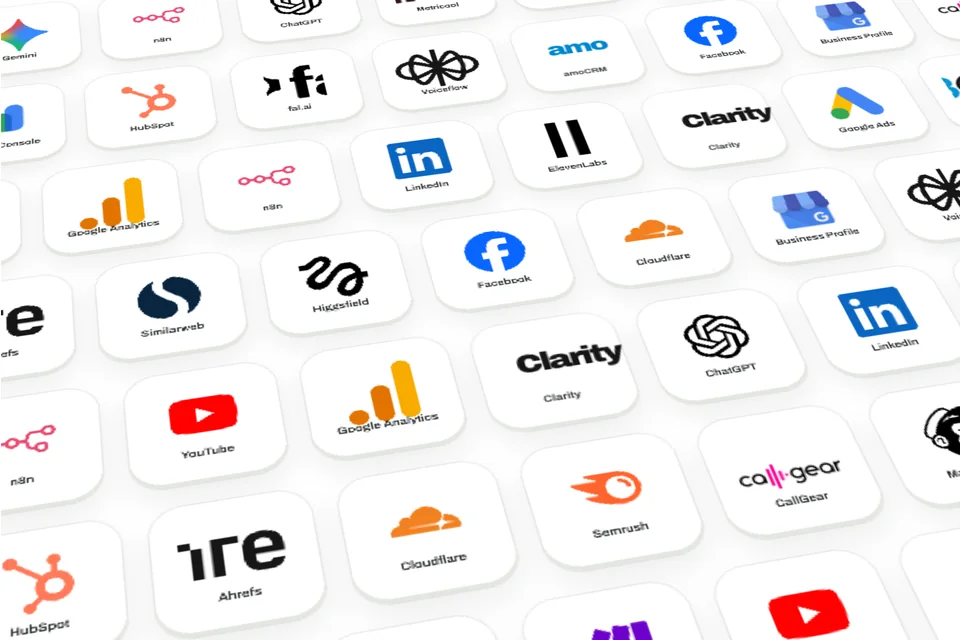
The recording below is our own website, 3tf.agency. The home page shows the tools we work with, and each one opens its own page with an interface reference and a short explanation of how we use it, from AI chatbots in Voiceflow to video marketing on YouTube. Every page in it is built with the same approach we use for clients.
- Speed. Lightweight pages, compressed images and video, and no heavy page builders, so the first screen opens quickly on mobile data.
- Clean tracking. Google Analytics 4, Google Tag Manager, the Meta Pixel and Conversions API, the TikTok Pixel and Microsoft Clarity, set up so each platform learns from real enquiries rather than page views.
- Forms that reach the CRM. Every enquiry arrives with its source, campaign and keyword, and nobody has to copy it from an inbox.
- Ready for remarketing. Audiences start collecting from launch day: visitors, people who viewed key pages, people who started a form and people who sent one.
- Room to grow. New landing pages, offers and languages can be added without rebuilding the site.
When we rebuild a client's site
If you already have a website, we audit it first: mobile speed, tracking, forms, the CRM connection and how easily new landing pages can be launched. If it meets our standard for advertising and remarketing, we work with it as it is.
If it does not, we recommend redesigning or rebuilding the parts that matter before we spend the advertising budget. Sometimes that is the design, sometimes only the technical side. Sending paid traffic to a site that cannot convert it, or cannot report it properly, wastes money and makes every later decision less reliable. We would rather fix the foundation once than explain weak results every month.
How we work, stage by stage
Every project follows the same sequence, so you can see what happens at each step and what you receive before the next one starts.
- Market research. We study demand before we design anything: what people search for and how often, in which languages and areas, seasonal peaks and typical prices. You receive a short market brief with the demand we can realistically capture and the questions customers ask before they buy.
- Competitive intelligence. We review the businesses you lose customers to: their websites, offers, prices, reviews, the keywords they bid on and the ads they run, using public sources such as the Google Ads Transparency Center and the Meta Ad Library. You receive a competitor map showing where the market is crowded and where there is room for a sharper offer.
- Marketing strategy. From the research we build the strategy: positioning, the core offer, target segments, the channel mix, the budget split and the numbers we will be judged on, such as cost per lead and cost per qualified lead. This is strategic marketing in plain terms: a plan for where growth comes from, not a list of posts.
- Website build or rebuild. We design and build the site, or rebuild the existing one, around that strategy: structure, copy, speed, tracking, forms and the CRM connection. Nothing goes live until test enquiries have passed from every form into the CRM.
- Advertising launch. We set up campaigns, audiences and conversion tracking on the channels the strategy selected. They are described in the next section.
- Lead management and CRM. Leads arrive in the CRM in real time with their source. We set up stages, notifications, follow-up tasks and reminders, so every enquiry gets an answer and you can see which campaign produced which deal.
- Reporting and optimisation. We review results every week: what each channel cost, how many leads it produced and how many were qualified. Budget moves towards what works, and new landing pages and creatives are tested against the current best.
Let’s discuss your project
Leave your number. We’ll help you choose the next step.
The advertising we set up
Google Ads. Search campaigns for people already looking for your service; the Display Network for reach and remarketing across websites and apps; Performance Max and YouTube where the offer suits video and broader audiences. Campaigns are optimised for enquiries recorded on the site, not for clicks.
Meta: Facebook and Instagram. Lead and conversion campaigns built on real data. We create lookalike audiences from people who have already sent enquiries, from customer lists and from the audiences we have built up through our previous campaigns and projects. We combine them with retargeting of site visitors and people who engaged with your content. For premium offers we add signals that point to higher-value buyers, so the budget reaches people who can afford the service rather than the cheapest clicks. Audience data is used within each platform's rules and with the consent it requires.
TikTok. Short video ads and Spark Ads for products and services that sell visually, with the TikTok Pixel on the site so campaigns optimise for enquiries.
Autoposting and content. A content plan with scheduled publishing to Instagram, Facebook, TikTok, LinkedIn and your Google Business Profile, so your accounts stay active while the ads run. People who click an ad often check the profile next, and it should show a business that is open and working.
Remarketing across channels. Visitors who did not send an enquiry see relevant follow-up ads on Google, YouTube, Facebook and Instagram, with messages matched to the pages they viewed.
What you can expect from us
One team is responsible for the whole chain: research, strategy, website, advertising and CRM. You get one set of numbers from the first click to the signed deal, and a clear answer to the question every business owner should ask an agency: if leads drop, where exactly is the problem? Because we built the site and the tracking, we can answer it.
We work in the languages your customers speak. To discuss your project, contact me directly or book a call below.

Your next move
What should your business focus on next?
Take our five-question growth quiz. Share your details at the end to receive your plan.
The quiz needs JavaScript to build your plan. You can also share your business, priorities, budget and timing with us directly.
Send a requestWhere should we send your plan?
Your plan appears as soon as it’s sent. We’ll get back to you within one working day.
Your answers, turned into next steps
Here’s where
we’d start.
A starting point based on your answers. We’ll confirm the scope, costs and timing together.