Dubai ranks fourth: go digital first.
Dubai ranks fourth of 30 Global South cities for business conditions. What the scores mean for founders, and a digital plan for the first 30 days.


The idea in brief
Dubai makes it easy to open a company, so the hard part is winning customers. Spend the time the city saves on being found online, and use practical tools such as a CRM and automation: innovation is the factor where Dubai scores lowest.
What the new ranking says about Dubai
On 10 November 2026 the consulting firm Yakov and Partners published Global South Cities: New Centres for Business and Industry, prepared with the research company ROMIR. It compares 30 cities, one per country, from Singapore and Shanghai to Lagos and Addis Ababa, on seven factors built from 113 indicators. The data comes from official statistics, a survey of company executives about local business conditions, and large datasets such as OpenStreetMap and mobile network measurements.
Dubai ranks fourth with 57.3 points. Only Singapore (69.8) and Shanghai (66.3) score higher; Moscow has the same rounded score and is placed third on the unrounded value. Together the four form the report's group of leaders. The next cities are Kuala Lumpur, Mumbai, Riyadh, Istanbul and Doha.
The overall rank is less useful than the profile behind it. The report finds Dubai above the sample average on all seven factors, and the gaps between them say a good deal about what a new company here will find easy and what it will find hard.
- Government and public services: 77.9. Rule of law, regulatory stability, public services and e-government.
- Real estate and utilities: 64.2. Offices, industrial space, costs, utilities and hospitality.
- Finance and tax: 63.9. The highest score of all 30 cities in this factor.
- Digital infrastructure: 60.9. Telecoms, computing and cloud capacity, and access to data.
- Human capital and quality of life: 60.1. Talent, education, the labour market, safety and cost of living.
- Transport and connectivity: 52.1. Air, sea, road and rail links, and logistics.
- Innovation ecosystem: 24.3. Research and development, research institutions and the maturity of the innovation scene. Singapore scores 81.2 here and Shanghai 67.0.
Easy to start means more competitors
Read from a business owner's side, the strongest scores describe a city where starting is easy: the best finance and tax conditions in the sample, efficient public services and good office space. That is why so many founders move their companies here, including from cities in the same ranking such as Moscow, Almaty, Tashkent and Baku.
Our view is that this ease has a cost the index does not show. When registering a company is the easy part, the hard part moves to winning customers. A new clinic, real estate brokerage or yacht charter in Dubai opens next to dozens of established competitors who already rank on Google, already have reviews and already run advertising in several languages. Customers compare them on their phones before they call anyone.
So the practical conclusion for a founder is simple: the city removes most of the administrative friction, and the time that saves should go into being found and chosen. A company that has its licence in two weeks but no working website, no Google Business Profile and no way to track enquiries has used the city's advantage for nothing.
The innovation gap is an opening for small firms
The report names the innovation ecosystem as the main area where Dubai can still grow, and the gap is large: 24.3 against 81.2 for Singapore. Its recommendation is aimed at governments: a technology leadership strategy that links research with commercialisation and the adoption of advanced technologies.

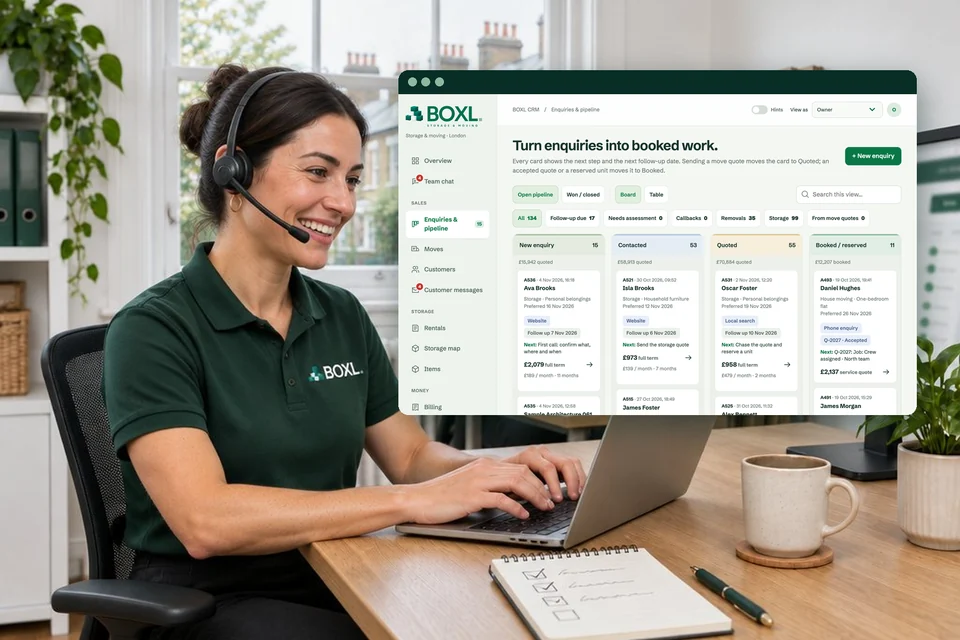
The index measures research and innovation capacity at city level, not how individual companies use software, so it says nothing directly about your competitors' tools. We still read it as a useful hint. In a market where the city's strengths are capital, tax and administration, practical technology is not yet standard, and a small company can stand out with things that are now inexpensive to set up: a CRM that receives every enquiry with its source, automatic follow-up reminders, an AI chatbot that answers common questions at night in the customer's language, and reporting that shows which campaign produced which deal.
The report illustrates where this leads with manufacturers in Shanghai. It cites a Haier factory where industrial internet and AI raised output by 37% and cut production costs by 33%. Those are factory numbers, and a service business should not expect the same. The direction is what matters: companies that put data and automation into everyday work get more from the same resources.
A digital plan for the first 30 days
This is the sequence we would propose to a company that has just opened in Dubai, or moved here, and wants its first enquiries quickly. It is a plan, not a report of past results: timing depends on the business and on how quickly materials are ready.

- Week 1: research and the offer. What customers in Dubai search for in your field, in which languages and areas, what competitors offer and charge, and where there is room for a sharper offer.
- Week 1: Google Business Profile. A verified profile with the right category, hours, photos, services and a WhatsApp link, so the company appears on Google Maps from the start.
- Weeks 2–3: a fast website. Services, prices or price ranges, real photos, WhatsApp and call buttons, and forms in the languages your customers speak, with analytics, the Meta Pixel and conversion tracking set up before launch.
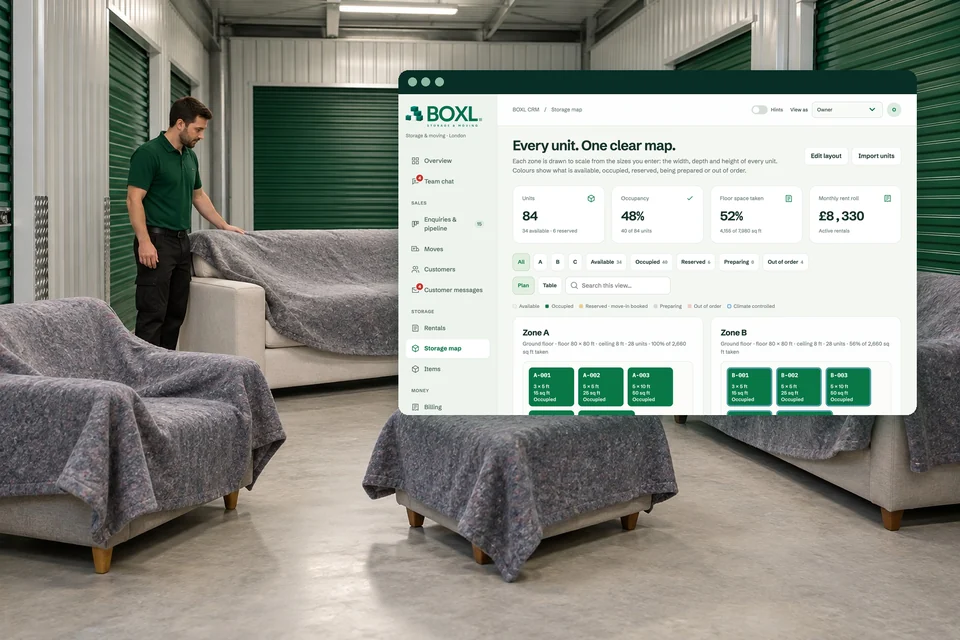
- Weeks 2–3: CRM from the first enquiry. Every form and message arrives in the CRM with its source, the right person is notified at once, and nothing depends on someone checking an inbox.
- Week 4: the first campaign. A Google search campaign for people already looking for the service, with a small budget and optimisation for recorded enquiries rather than clicks. Meta and TikTok come next, when the offer suits them.
- From week 4: weekly numbers. Cost per enquiry, cost per qualified enquiry and which channel produced each deal, so the budget moves towards what works.
Let’s discuss your project
Leave your number. We’ll help you choose the next step.
What the report means for B2B and logistics
A large part of the report is about industrial infrastructure: compact complexes that combine production, storage, offices and services for small and medium-sized companies, multi-storey sites in dense cities, and hubs that offer residents a ready environment instead of a plot of land. In Dubai it highlights the multi-storey warehouse complex at Dubai South, with access to the airport, the port and international trade routes, and the model of TECOM Group, which builds the platform and basic infrastructure while private capital develops individual buildings and services.
For warehouse and light industrial developers, commercial real estate brokers, logistics and fulfilment companies, the competition for tenants is a marketing task like any other. Decision makers compare locations online long before a site visit, so clear pages for each type of space, current availability, fast enquiry forms and search campaigns for specific B2B queries make a measurable difference. We think this segment is underserved by agencies that focus on consumer brands.
How 3tf can help
We build fast websites and then run the marketing around them: research, strategy, the site, Google Ads, Meta, TikTok and the CRM, with one set of numbers from the first click to the signed deal. If you are opening or moving a company to Dubai, we can plan the first 30 days with you and tell you honestly which steps you need now and which can wait.
The figures in this article come from the Yakov and Partners report; the conclusions for business owners are our own. To discuss your launch, send a request below.
Source and editorial date
Primary source, checked 17 November 2026: Yakov and Partners and ROMIR, Global South Cities: New Centres for Business and Industry (in Russian), and its Global South Business and Industry Conditions Index 2026. All scores and examples are taken from the report; the opinions and the 30-day plan are 3tf's. 3tf is not affiliated with the authors.
Your next move
What should your business focus on next?
Take our five-question growth quiz. Share your details at the end to receive your plan.
The quiz needs JavaScript to build your plan. You can also share your business, priorities, budget and timing with us directly.
Send a requestWhere should we send your plan?
Your plan appears as soon as it’s sent. We’ll get back to you within one working day.
Your answers, turned into next steps
Here’s where
we’d start.
A starting point based on your answers. We’ll confirm the scope, costs and timing together.